How your actions directly impact our climate destruction….
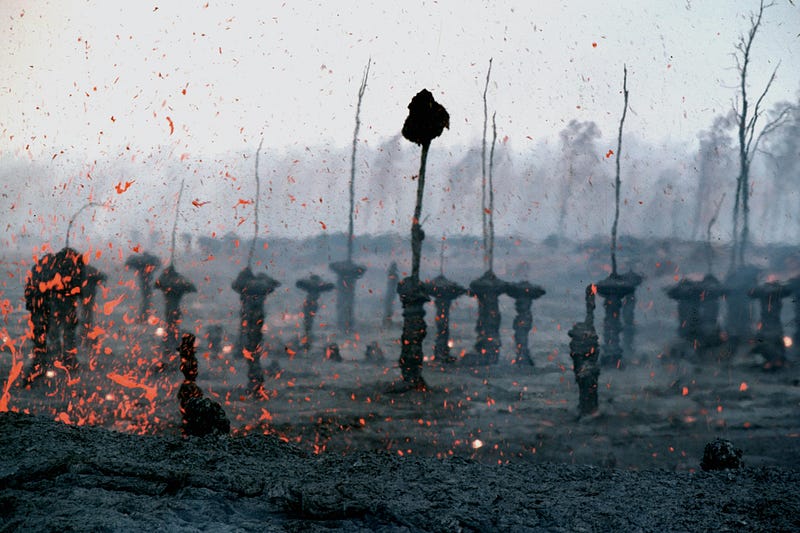 Photo by
 We are changing the climate globally through our emissions of greenhouse gases.
Greenhouse gases like carbon dioxide (CO₂), methane (CH₄) and nitrous oxide (N₂O) are created when we burn fossil fuels, produce materials like steel, cements and plastics and also through agriculture growing the food we eat.
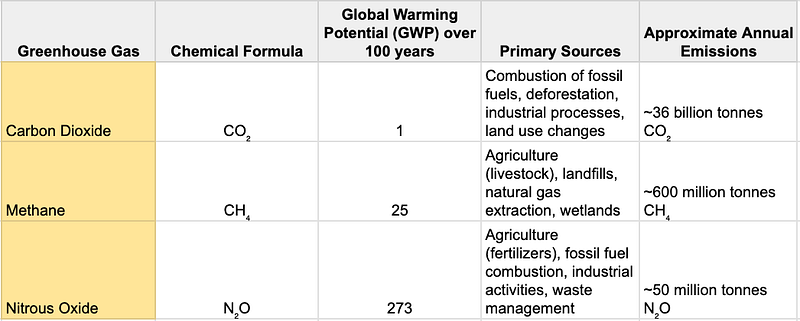
Carbon dioxide is responsible for the majority of human-caused global warming due to its high concentration and longevity.
The amount of carbon dioxide pumped into the atmosphere is an order of magnitude higher than the other types of greenhouse gases, and even though the other gases have a more potent effect on warming, a percentage reduction on the carbon dioxide output will have more effect.
We will need to transform our energy supplies, industries and food production in order to be able to reduce these emissions.
Everything we do creates greenhouses gases, and in order to remain within a global acceptable level, we should be monitoring our carbon footprint and ensuring we remain within our personal limit.
Carbon in the atmosphere causes Climate Havoc
Greenhouse gases in the atmosphere causes warming by absorbing and re-radiating infrared radiation emitted by the Earth’s surface, trapping heat and increasing the planet’s temperature. This process, known as the greenhouse effect, is essential for maintaining a habitable climate but is intensified by human activities, leading to global warming and climate change.
The industrial revolution kicked off the increase in greenhouse gas production by burning large quantities of fossilised carbon — carbon that would otherwise have remained locked up in the oil, gas and coal deposits underground. These gases trap the energy from the sun within the atmosphere, heating up the planet.
In the pre-industrial period and for the 800,000 years beforehand, carbon dioxide levels in the atmosphere didn’t exceed 300ppm (parts per million).
In 2022, the average level was 417ppm….
Warming means changes to our global climate, and if the climate warms by more than 1.5 degrees Celcius above pre-industrial levels, significant and widespread impacts are expected.
For example at 1.5 degrees, the coldest nights at high latitudes (ie polar regions) warm by around 4.5 degrees, and with a 2 degree increase, those coldest nights warm by around 6 degrees.
This causes glaciers to melt (both in areas like the Himalayas and Polar Regions) which threaten downstream populations with water shortages (approx 2 billion people affected).
Just look at what is happening right now globally, with mega-fires in Canada, extreme rainfall and flooding in Europe, and extreme heatwaves across Europe, Asia and Americas…
Current data shows we are rapidly approaching 1.5 degrees of warming, and at current levels of emissions the average temperature will simply continue to rise:
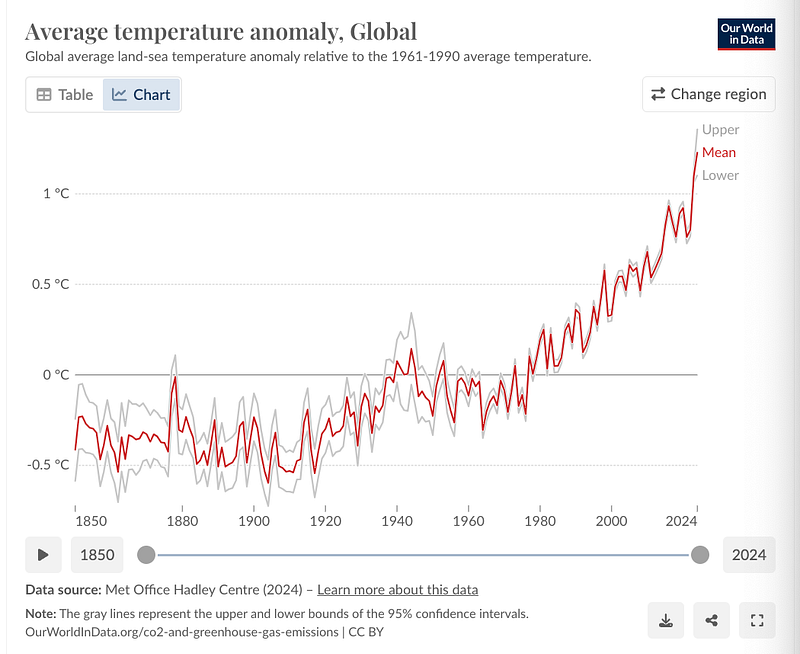
The UN’s latest Emissions Gap report states that the world is on track for 3C of warming by the end of the century.
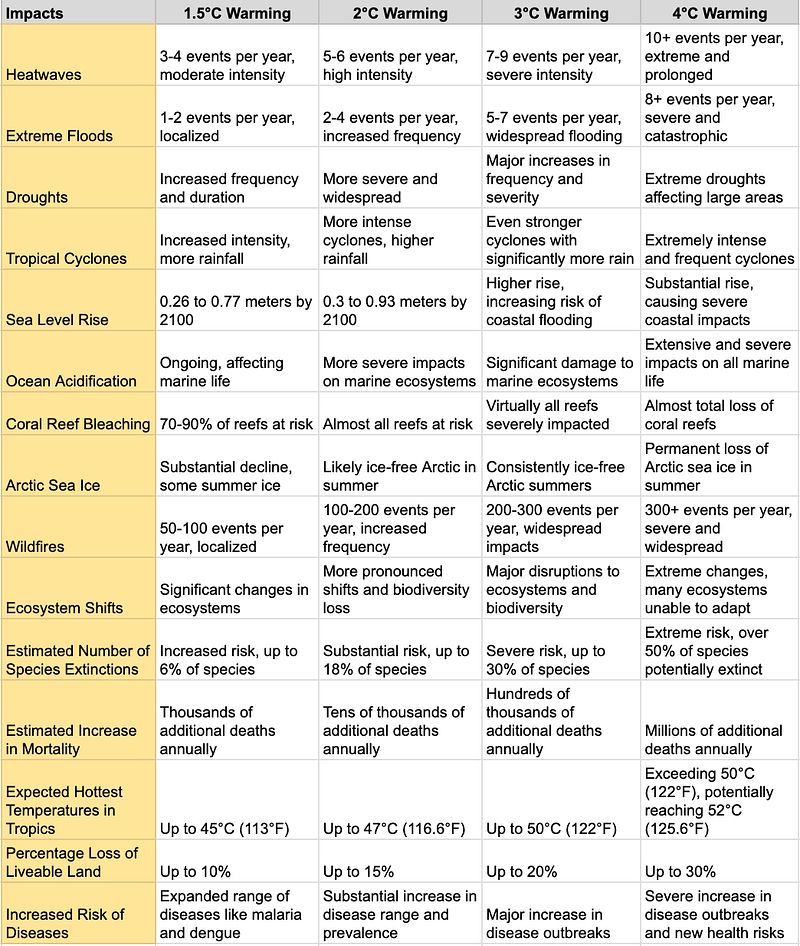
Based on data from the IPCC’s special report we have extrapolated the differences we can expect to see in the environment due to different levels of warming increase:
Acceptable Carbon Footprint per Person
We need to determine what target temperature increase we want to stay below in order to calculate our individual acceptable carbon footprint.
This graph shows we are currently emitting 41 billion tonnes of CO₂ per year (2022 level), and shows the remaining available budget and percentage chance of remaining within either a threshold of 1.5 or 2 degrees:
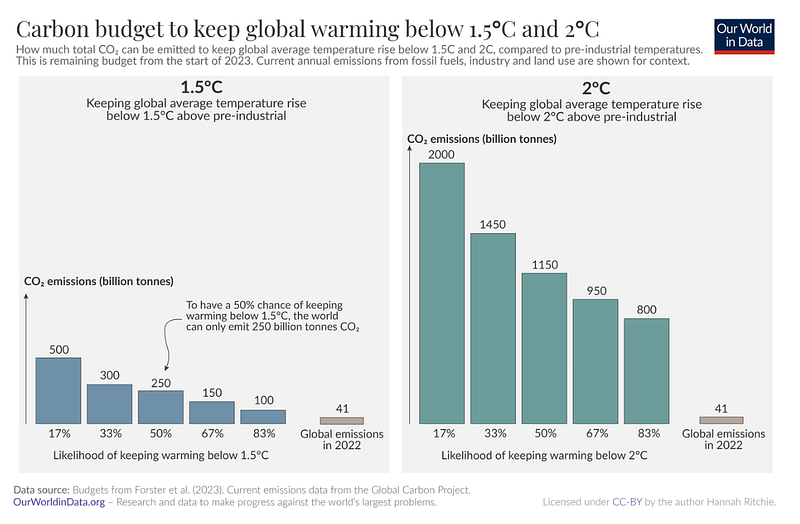
If we aim for the 1.5 degree threshold, you can see we would only be allowed to emit a further 250 billion tonnes to have a 50% chance of meeting this. At our current rate of over 40 billion tonnes per year, we will already have overshot this within 6 years.
Without radical transformations (of which there is not yet enough pain and suffering to trigger) there are no realistic pathways for us to avoid overshooting the 1.5C limit.
Even the 2C limit looks shaky since current national commitments are too inadequate to protect us against overshooting this.
However there may be a possibility if we take individual action now, that we can stave off a 2C increase.
Let’s work out what is needed from us all in order that we don’t exceed a 2 degree increase over pre-industrial levels.
Looking at the above graph, to get a 67% (two thirds) probability that we don’t go over 2 degrees, we can’t emit more than 950 billion tonnes of CO2.
Let’s say we want to remain within this limit for the next 30 years, and assume that we will have some way to extract and remove carbon by then or we are able to hit net-zero CO₂ emissions at that time.
We can also assume that in 30 years we will have a global population of around 9.7 billion people so the average number of people globally between now and then is 8.9 billion.
Thus our calculation becomes:
950 billion tonnes of CO2 / 8.9 billion people = 106.7 tonnes per person for the next 30 years.
To get our annual allocation, this then works out at 3.5 tonnes annually per person.
Therefore, if every person on the planet aims to remain within their 3.5 tonne per year allocation we have a 2/3rds chance we won’t overshoot the 2 degree warming level in the next 30 years and keep our only means of survival, our planet, habitable…
Activities and their Carbon Footprint Index
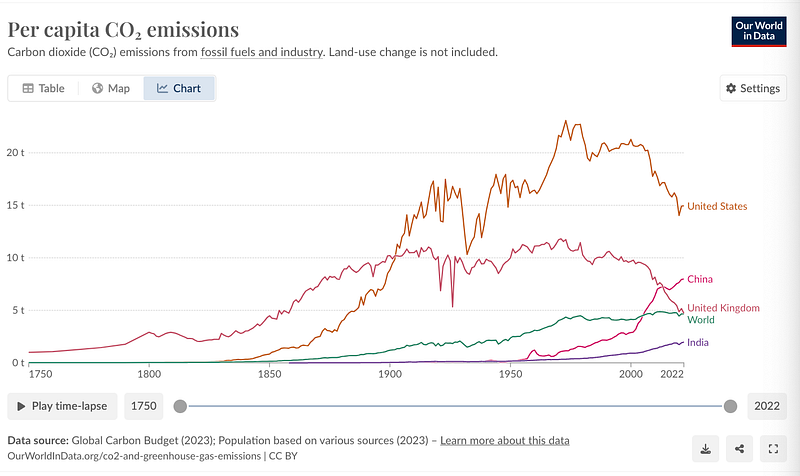
You can see from the following graph how the UK and US have dropped their per person (ie capita) annual emissions, but other countries are just starting their climb, and the global average is currently around 5 tonnes per year.
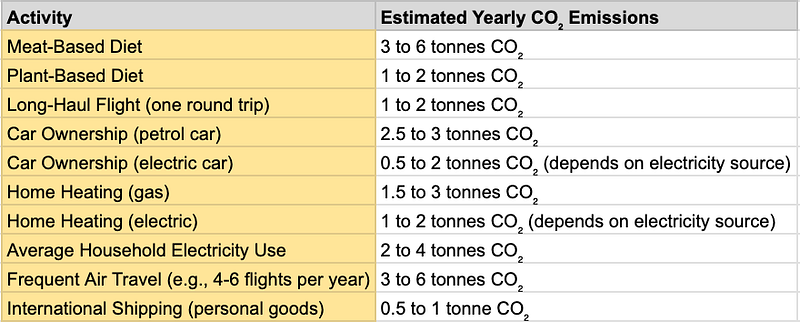
To give you an idea of different types of activities and the approximate yearly emissions related to each we have put together this table:
This then gives us some clear indications of changes we could make in order to minimise our emissions output, eg:
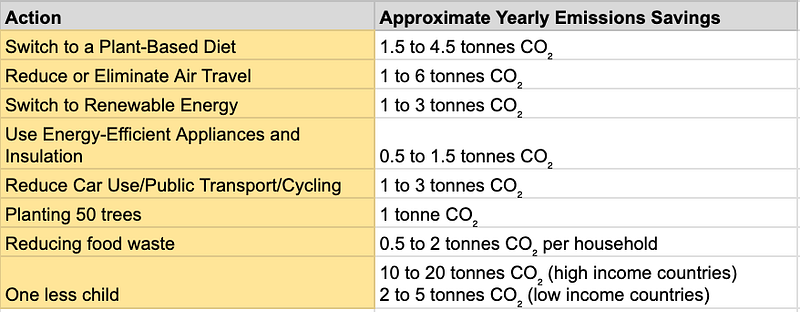
So the top four actions, would be:
- Eat a plant based diet
- No air travel. Switch to zoom calls and holiday locally.
- Live car free.
- One less child
Only with the above changes do we stand a chance of getting close to our individual annual footprint quota of 3.5 tonnes.
The problem most of us will have with adapting to this new found reality will be one of these two arguments:
- Doesn’t impact me.
- Lots of others (eg India) have way less emissions, so it averages out and I am ok to go over.
It does impact you. You just don’t see it.
If you had to choose between not taking a long haul flight versus not having wildfires and floods directly outside your home for the year, you would surely choose not to take the long haul flight.
But this is exactly the choice you’re making, only that the wildfires and floods are happening elsewhere so you don’t see the direct cause and effect.
Similarly you might argue that it’s ok to take a few long haul flights, have two cars and eat meat, since the rest of the world is not doing this so it averages out.
However everyone wants to have the same first world standard of living and most countries are rapidly approaching this level of prosperity, so in the interests of fairness we need to look at this as an equal amount for everyone to use.
Conclusion
There is no longer any excuse.
Data shows what happens when the planet warms. Data also shows how much time remaining we have before this happens. We know what activities are causing these issues. We also know that governments are not moving fast enough.
The only remaining course of action is to take individual responsibility and make immediate changes to reduce our own personal emissions amounts.
Work out what your emissions are, and if they are over 3.5 tonnes annually, then make changes.
Only this way can we avoid creating an inhospitable legacy for our future planetary carers…